
I’ve taken three flights, and a diesel van to arrive Jet Fresh from Melbourne, Australia (well, Hobart actually, which was the first flight, but that’s a whole other story) to attend a sustainability tourism conference. Now, as I’m picking up my paper, no plastic name badge in the rather swish Courtyard by Marriott Phuket Town hotel, I’m dying!
Not, as you may presume from the hectic travel schedule, but because an arrival questionnaire needs to be completed. The organisers are assessing our global environmental impact in order to offset it. I’m impressed they asked, and recognise the irony of revealing my carbon footprint.

In for a penny, in for three flights. I confess all. I tick all relevant boxes and scurry away with my Global Sustainable Tourism Council (GSTC) free reusable water bottle to join my peers, distinguished Aussie and New Zealand journalists for what will be a busy few days. We’re here for a trip that focuses on Sustainable Tourism in and around Phuket, set against the backdrop of the conference.
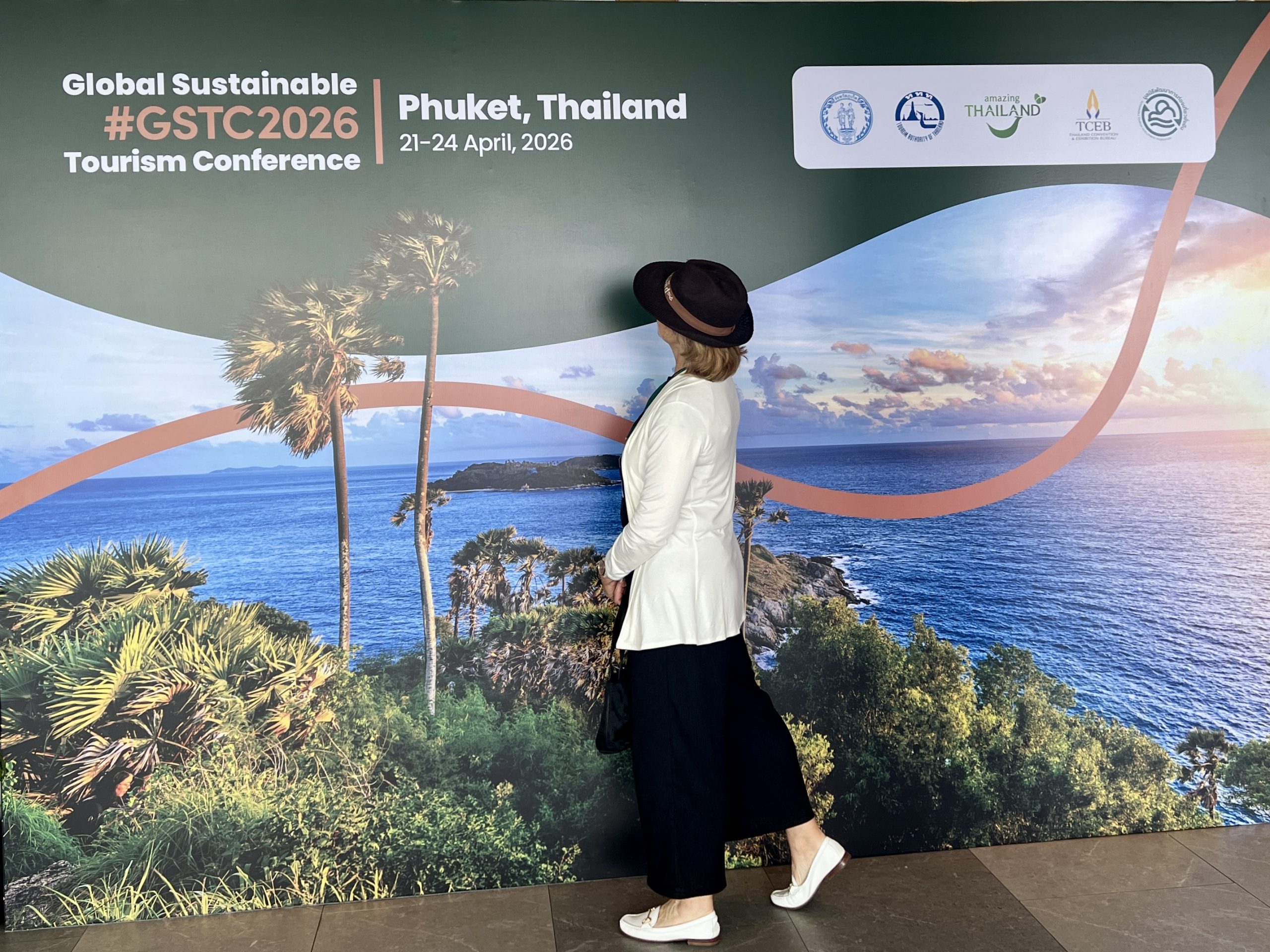
What is GSTC Phuket 2026
The Global Sustainable Tourism Conference is a gathering of world leaders & stakeholders in sustainable tourism. There were 575 attendees from over 55 nations and one Little Wren – moi!
Who are the Global Sustainable Tourism Council?
Not going to lie, until this invitation, I’d never come across the Global Sustainable Tourism Council. So I was eager to find out more and get up to speed on their brief. I soon learn GSTC is a non-profit organisation that establishes and manages global standards for sustainable travel and tourism. Their overall vision is pretty simple:
To make tourism a force for good — environmentally, culturally, and economically — while ensuring destinations remain viable and enjoyable for future generations.
Their annual conference is a pretty big deal here in Phuket — you can’t miss it, with billboards across the island announcing its arrival.
I came with an interested dose of scepticism. Hosting world leaders in global sustainability doesn’t automatically mean a destination has everything figured out. That said, Phuket did have to meet the GSTC’s rigorous selection criteria to host, which counts for something, and they have laid on electric shuttle buses for event transportation.
And ultimately, that’s where real value lies — if the destination listens, learns, and genuinely takes on board the best practices being shared, it can only be a positive step forward.
From my personal perspective, I’m hoping this conference help answer my question:
“What does genuinely sustainable tourism actually look like?”
For me, I’m constantly searching for answers to the modern travel dilemma ‘𝘏𝘰𝘸 𝘥𝘰 𝘸𝘦 𝘬𝘦𝘦𝘱 𝘵𝘳𝘢𝘷𝘦𝘭𝘭𝘪𝘯𝘨 … 𝘣𝘶𝘵 𝘥𝘰 𝘪𝘵 𝘣𝘦𝘵𝘵𝘦𝘳?’
If you are interested in further details about the GSTC, you can read more here.

Why Phuket?
I’m excited that my once-home island, Phuket, Thailand, was chosen for such an important gathering. Excited for two reasons, I hope that, with the world’s eyes on Phuket, as a frequent visitor to the Pearl of the Andaman, I can learn more about their current and future sustainability initiatives and responsible tourism directives.
Secondly, I know the challenges the island faces. It also offers an international airport and a safe, stable tourism destination amid an increasingly unstable world. Phuket is a popular and ever-growing destination and at times a victim of its own success. The island’s recent high season 2025/6 was the best in five years, topping pre-COVID levels; however, this all comes amid the pressure and challenges of climate change, air quality, and poor water reserves, before we even get into mass development, deforestation, landslides, and high-season gridlocked traffic. There are issues.
I’m hoping this public commitment to being part of the movement means that environmental conservation and the adaptation of the tourism industry remain priorities amid these pressures and challenges.
What is Sustainable and Responsible Tourism?
Sustainable Tourism refers to sustainable practices in and by the tourism industry, and Responsible Travel is a term used to describe the behaviour of travellers who aspire to make choices on their trips in line with sustainable tourism practices.
Booking.com were a sponsor and an exhibitor at GSTC2926. In 2025, their annual travel predictions research reveals growing traveller awareness of tourism’s impact on communities both at home and abroad. Read more here.
Randy Durband, the CEO of GSTC, commented in a closing speech that more and more travellers are looking for authenticity.

Why attend the Global Sustainable Tourism Conference?
This conference gave me the chance to meet with leaders, movers, and shakers, hotel owners, and business owners.
As much as the sessions inside the conference room are outstanding and important, it is often the passing conversations at other times that stay with you.
I was super excited to join for dinner those involved in eco-lodge developments: Dtor and Peter, who operate an ecolodge, Harmony@HuaiLan, 30 mins outside Chiang Mai; and Ulf, Hospitality Director at Anurak Community Lodge, an eco-friendly haven in Khao Sok, well known to us after our stay in 2023. The next day, I sat next to Nyoaman at the phenomenal-looking Banbootel Luxury Boutique Resorts in Bali, which had me swooning. These are all exactly the sorts of unique places, with an already proven sustainability track record, that I love to seek out.

The conference exhibitors include Khun Kasmaporn, President of the Krabi Hotel Association, whom I’m interested in chatting with to learn more about their carbon-neutral tourism initiative and the Krabi Hotel Waste Recycling Project. This aims to reduce hotel waste and minimise landfill waste by implementing proper waste sorting within hotels.
Hotels generate huge amounts of waste daily—food scraps, plastic packaging, toiletries, laundry waste—and in many destinations (including parts of Thailand), landfill systems are already under pressure. What Khun Kasmaporn and the Krabi Hotel Association are doing isn’t just a “green gesture”—it’s a system-level change across multiple hotels, which is where real impact happens. So huge round of applause from me.
Top Tip: Ask one simple question at check-in: “How does your hotel manage waste and recycling?”
It takes 10 seconds—but it does two powerful things: It encourages staff to share (and take pride in) what they’re doing, and if they are in Krabi, chances are they have a great answer here! Secondly, it signals to the hotel that sustainability matters to guests.

In the photo below, I am talking to Khun Ace, founder of Greenery Water in the tourism industry, who tells me that Thailand consumes 6 billion plastic bottles annually, with only 9% recycled. (Reaching for my GSTC waterbottle as I write.) The remaining 91% are buried, burned or end up polluting our oceans. Even more impactful was staring at this computer screen, which says:
“By 2050, the Ocean is expected to contain more plastics than fish (by weight)“
Pausing here, I have many thoughts going through my mind. The first is a visual of little fish swimming through the water bottles. The second is that 2002, twenty-four years ago, has gone by in a flash. We will reach 2050 in a jiffy, and that’s really sad.
Greenery offered water in recyclable aluminium cans to reduce waste and boost sustainability efforts, and appeal to the growing demographic of environmentally aware guests.
I used Greenery to illustrate some of the many interesting exhibitors at GSTC, making a difference with their sustainable products and offerings.
How can we ensure that our travel is responsible? What should we look for?

What does Responsible Travel look like in 2026?
Here are some of the biggest takeaways regarding Responsible Travel. Choose, book and stay where your tourism dollar has impact. By this I mean…
Does your travel benefit local communities?
One of the clearest messages was that destinations can’t thrive if local people don’t benefit from tourists too. More hotels, tour companies, and destinations are now focusing on:
- employing local staff
- supporting local producers and artisans
- protecting cultural traditions
- keeping tourism income within the community
It’s a reminder that where we choose to stay, eat, and shop really does matter.
Top Tips: When you travel, try to spend your money where it stays local. Ask how your hotel supports its local community, or choose family-run guesthouses. Eat in locally owned restaurants. Buy directly from artisans, and book tours led by community guides.
Small choices from travellers can have a surprisingly big impact — helping preserve culture, support livelihoods, and keep destinations thriving for the people who call them home.

How to connect with local communities?
The conference offers the choice of many sessions, and I was especially interested to attend and learn more about something close to my heart 𝗖𝗼𝗺𝗺𝘂𝗻𝗶𝘁𝘆 𝗕𝗮𝘀𝗲𝗱 𝗧𝗼𝘂𝗿𝗶𝘀𝗺 (CBT): 𝘛𝘰𝘶𝘳𝘪𝘴𝘮 𝘣𝘺 𝘭𝘰𝘤𝘢𝘭 𝘱𝘦𝘰𝘱𝘭𝘦, 𝘧𝘰𝘳 𝘭𝘰𝘤𝘢𝘭 𝘱𝘦𝘰𝘱𝘭𝘦.
Thailand was given as an example of a leader in this area of tourism “𝘤𝘰𝘶𝘯𝘵𝘳𝘪𝘦𝘴 𝘵𝘢𝘭𝘬 𝘢𝘣𝘰𝘶𝘵 𝘊𝘉𝘛: 𝘛𝘩𝘢𝘪𝘭𝘢𝘯𝘥 𝘪𝘯𝘴𝘵𝘪𝘵𝘶𝘵𝘪𝘰𝘯𝘢𝘭𝘪𝘻𝘦𝘥 𝘪𝘵” From my own experience, readers of my blog will have seen examples of my own community based tourism (scroll to the end of this post to read more of my time with local communities.)
In my experience, the biggest barrier to the public engaging with local communities is a confusing choice about how to connect, book, and know whether your money goes directly to the local communities.
This was covered “𝘦𝘯𝘵𝘦𝘳𝘱𝘳𝘪𝘴𝘦𝘴 𝘥𝘰𝘯’𝘵 𝘧𝘢𝘪𝘭 𝘣𝘦𝘤𝘢𝘶𝘴𝘦 𝘰𝘧 𝘲𝘶𝘢𝘭𝘪𝘵𝘺, 𝘣𝘶𝘵 𝘣𝘦𝘤𝘢𝘶𝘴𝘦 𝘵𝘩𝘦𝘺 𝘤𝘢𝘯𝘯𝘰𝘵 𝘣𝘦 𝘧𝘰𝘶𝘯𝘥, 𝘦𝘷𝘢𝘭𝘶𝘢𝘵𝘦𝘥 𝘰𝘳 𝘣𝘰𝘰𝘬𝘦𝘥”

Some suggested Tour Operators
My second session featured panellists from the following Tour operators who are specialists in this type of tourism in Thailand and beyond.
Exo Travel Group: Based in Bangkok, they operate in 13 destinations—including Thailand, Vietnam, Cambodia, and Japan —and specialise in Tailor-made, sustainable, and high-quality travel, emphasising responsible tourism and local community empowerment. More at www.exotravel.com
Local Alike: An award-winning Thai social enterprise established in 2013 that promotes community-based tourism to foster sustainable local development. Offering tours in Bangkok and Chiang Mai. We have joined their ‘Khlong Toei Bangkok: Explore Biggest Slum in Bangkok‘ tour. More at www.localalike.com
Guide Guru X: A tour operator providing authentic, carbon-neutral, and sustainable local experiences in Thailand and beyond. More at www:guideguru.live
Top Tip: If you want a genuine connection with local communities and can’t find a direct way to do so, then book through trusted operators who specialise in community-based tourism — it’s the simplest way to ensure your experience is authentic and your money makes a real difference.

Slow Travel, Stay Longer, Pick Secondary Destinations
One of the big banners of the Conference was ‘Slow Travel: Staying Longer and in Secondary Destinations.’ My hand shoots straight up for this. This type of travel is right up my alley, given my over-60s demographic. It suits us for many reasons.
As older travellers and retirees, we have time, and we don’t need to rush (some days we can’t even rush!) We like to stay longer; we don’t just want to get to see a place, we typically want to know it,
Dare I say it, I have never had a massive bucket list, and these days I have come to the realisation that places like Everest Base Camp, Machu Picchu and the like are never going to happen! Slow Travel, staying longer, in the off-season, is definitely my way to go.

Sustainability is moving beyond “greenwashing”
Travellers are becoming more informed — and the industry knows it. At GSTC2026, there was a big focus on measurable actions rather than vague eco claims:
- Reducing food waste (I learned a few things). Did you know buffet eating in your posh hotel or cruise is a massive source of food waste? One idea has been to issue guests with smaller plates, which encourages better portion control and less waste.
- Cutting single-use plastics: hotels are making efforts, such as offering reusable toiletries and plant-based straws. When you review a hotel, include any good (or bad!) examples of sustainable practices in action.
- Water management: When you say the shower water pressure is pretty weak, it’s more likely these days that hotels themselves are reducing the water pressure to meet their water conservation targets!
- Energy efficiency – a big one in this region is the huge impact of air conditioning. One of the things we were pleased to see at our conference hotel (Courtyard by Marriott Phuket) was the solar panels on the car park shade roof.
- Protecting biodiversity (I think this needs a whole blog post!)
However, in general, the conversation feels as if it’s shifting from marketing buzzwords to action and accountability.

Food tells the story of a destination
This is always especially noticeable in Thailand. Local cuisine isn’t just a tourist experience — it’s cultural preservation, community support, and sustainability all wrapped into one. Food is one of the most powerful ways travellers connect with a place.
Top Tip: We all need to eat. Forget the all-inclusive package (unless you are staying on a remote island!) and eat out. Skip the international menu and seek out dishes that are unique to the region you’re in. Ask locals what’s traditional, visit family-run restaurants, or try a cooking class. It’s one of the simplest (and most delicious) ways to support local communities while experiencing the true flavour of a destination
Wellness travel is becoming more meaningful
Not just spa treatments and yoga classes — but longevity, nutrition, sleep, mental wellbeing, and slower travel experiences. Wellness tourism is evolving into something more holistic and intentional.
Top Tip: There’s a reason why we return home feeling better from our travels. This is a big call, but I will say it anyway. If we seek out more sustainable and responsible tourism, we eat well, get out and about, move more and sleep better, and connect with local people – we will always feel better!

Travellers don’t need to be perfect
It felt such a relief to leave the guilt of travel at the front door of this conference. I have friends who tell me they are only taking one International flight every two or three years to save our planet. Whilst each to their own, I want to travel, I want to continue to see the world in the remaining years that I am fit and healthy to do so. I have family split across three continents, so I’m sorry I’m unapologetic in my need to travel.
Permission to travel, with purpose
Since the conference, I feel more of a permission to travel — not without thought, but with purpose. Some would say, of course, you will, everyone there needs tourism for their enterprise and business. However, if it is easier for my tourism Baht, dollars, or pounds to go to sustainable enterprises, my money does good. As GSTC tells us, “tourism has many positive sides: providing jobs and opportunities, creating wildlife and cultural heritage awareness, and much more. “
This felt important. There was recognition that tourism itself has impacts, both good and bad—including the irony of flying to a sustainability conference. I had always dwelled, rather pessimistically, on the negatives of my carbon footprint; the GSTC allowed me to see things in a more optimistic way.

What stood out most? It wasn’t about perfection or guilt, but about:
- making more conscious choices
- travelling more slowly and meaningfully
- supporting responsible businesses
- asking better questions
Now, again, cynics might say: of course, if travel is decimated again, as in the recent pandemic, many of those present, representing hotels and businesses in tourism and travellers, will lose their jobs and money. But I have to say the overriding sentiment of those I met around the coffee stand or lunch table was a passion and a desire to support the environment and our planet.

Sustainability can still feel joyful
One of my favourite takeaways. Sustainable travel doesn’t have to feel restrictive or worthy all the time. Some of the best experiences at GSTC Phuket involved incredible food, cultural connections, nature, and community.
The future of travel isn’t about doing less necessarily — but about travelling with greater awareness and purpose.
Final Thoughts
And perhaps the biggest exciting learning of all?
People across the industry are trying. Not perfectly. Not always consistently. But there’s genuine momentum building toward a better way of travelling. In the words of GSTC, “Let’s continue to inspire change, champion responsibility, and lead tourism toward a more sustainable and inclusive future”.
I’ll drink to this – from my responsibly sourced Chalong Bay Rum cocktail (You see more on this sustainability visit @littlewanderingwren’s IG page here) made from 100 per cent Thai sugar cane! Until we meet again, thank you for reading and for being part of this global movement.
Thanks to 𝗧𝗼𝘂𝗿𝗶𝘀𝗺 𝗔𝘂𝘁𝗵𝗼𝗿𝗶𝘁𝘆 𝗼𝗳 𝗧𝗵𝗮𝗶𝗹𝗮𝗻𝗱 𝗦𝘆𝗱𝗻𝗲𝘆 𝗢𝗳𝗳𝗶𝗰𝗲 @hugthailand, we attended #GSTC2026, which took place in Phuket, from 21st to 24th April 2026

Follow us on Social Media: Find more photos of my travels and stories on Instagram @littlewanderingwren.
Read more on Little Wandering Wren’s Thailand Community Tourism wanders here:



4 comments
Lots to learn. Great information and post Wren! Take care, enjoy your day and the new week ahead.
Thank you so much Eileen. There really was a lot to take away from the conference, and I loved learning more about how tourism can make a positive impact when done thoughtfully. I’m so glad you enjoyed the post. Wishing you a wonderful weekend with lovely birding and dog walking ahead too!
Wren x
A lot to read in your post Wren … thank you.
All the best Jan
Thank you so much, Jan. I really appreciate you taking the time to read it. There was so much valuable insight shared at the conference, and I felt it was important to highlight how responsible travel can still be enjoyable, meaningful, and inspiring for all of us as travellers.
Have a great weekend.
Wren x